The Supreme Court has announced it will decide in April whether to reconsider its 2022 verdict upholding the Enforcement Directorate's powers to arrest and attach property under the Prevention of Money Laundering Act (PMLA). The court is hearing a batch of pleas seeking a review of the July 2022 verdict, which upheld the ED's powers of arrest and attachment of property involved in money laundering, search and seizure under the PMLA. The verdict came on a batch of over 200 petitions filed by individuals and other entities questioning various provisions of the PMLA.

The Attorney General has granted consent for initiating contempt action against an advocate, Rakesh Kishore, who hurled a shoe towards Chief Justice of India B R Gavai. The Supreme Court was informed of this development on Thursday.

The Supreme Court of India has emphasised the importance of open access to all temples and 'maths' for everyone, warning that excluding any denomination would negatively impact Hinduism and divide society. This statement was made during hearings on petitions related to discrimination against women at religious sites and the scope of religious freedom.

The Supreme Court of India has dismissed a public interest litigation (PIL) seeking to make dowry harassment and maintenance provisions "gender neutral." The court stated that it cannot legislate law and it is the responsibility of Parliament to look into such matters. The PIL, filed by an NGO, argued that these provisions are often misused to harass husbands and their families. The court, however, emphasized that every case must be judged on its own merits, and that the provisions are intended to protect women and children. The court also noted that the allegation of misuse was vague and that such claims should be examined on a case-by-case basis.

The Supreme Court has directed a Jharkhand-based lawyer to issue an unconditional apology to the High Court in a contempt case stemming from a viral courtroom exchange where he allegedly told a judge, "Don't cross the limit."

Hindus will offer prayers from sunrise to sunset on Basant Panchami while Muslims to offer namaz from 1 pm to 3 pm on Friday.

The Supreme Court has agreed to hear a Public Interest Litigation (PIL) in March seeking action against political parties that promise or distribute 'irrational freebies' before elections. The PIL argues that such practices unduly influence voters and undermine the fairness of the electoral process.
The Supreme Court has urged political leaders to promote fraternity while declining to entertain a PIL seeking guidelines on political speeches, emphasizing the need for objectivity and even-handedness in addressing concerns about hate speech and constitutional values.

The Supreme Court intervened to protect the Punjab Kesari newspaper from coercive actions by the Punjab government and its pollution control board, ensuring its continued publication.

The Supreme Court of India has agreed to examine petitions challenging the constitutional validity of the Digital Personal Data Protection (DPDP) Act, 2023, focusing on concerns about its impact on the Right to Information Act.
The Supreme Court ensured a widow received compensation 23 years after her husband's death in a train accident, highlighting the court's commitment to justice for the poor.

The Supreme Court has framed key legal questions regarding the University Grants Commission's equity regulations and stayed the implementation of the framework on caste-based discrimination in higher education institutions.

The Supreme Court has overturned an Allahabad High Court order, ruling that grabbing of breasts and pulling the pyjama string amount to "attempt to rape".

The Supreme Court has stayed a portion of a Delhi High Court order related to the Lokpal's investigation into Trinamool Congress MP Mahua Moitra in the alleged cash-for-query scam.
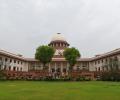
The Supreme Court has criticised Haryana Police and Gurugram's Child Welfare Committee for their handling of a three-year-old's rape case, ordering a special investigation team and a fair probe.
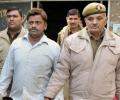
The Supreme Court of India has acquitted Surendra Koli in one of the Nithari murder cases, paving the way for his release. Koli was earlier acquitted in other Nithari killing cases.

The Supreme Court will hear on Wednesday a plea filed by West Bengal Chief Minister Mamata Banerjee challenging the ongoing Special Intensive Revision (SIR) of electoral rolls in the state.

"The entire nation was in shame due to the comments... We saw your videos , you were on the verge of using very filthy language but somehow better sense prevailed or you did not find suitable words. You should be shameful. Entire country is proud of our Army and you made this statement," Justice Surya Kant said.

The Supreme Court has ruled that women Short Service Commission officers in the Army, Navy, and Air Force, who were unfairly denied Permanent Commission, are entitled to full pensionary benefits.

Former Punjab minister Laljit Singh Bhullar has been arrested following the suicide of a state warehousing corporation official who accused the AAP MLA of harassment. The arrest follows public outcry and political pressure for accountability in the case.

Former Punjab minister and AAP MLA Laljit Singh Bhullar has been arrested for allegedly abetting the suicide of a state warehousing corporation official. The arrest follows accusations of harassment and pressure related to a warehouse tender.

Former Punjab minister Laljit Singh Bhullar has been arrested in connection with the suicide of a state warehousing corporation official who accused the AAP MLA of harassment. The arrest follows demands for a CBI probe and political uproar.

The Supreme Court has ordered a 'fair, dispassionate, transparent, and time-bound' investigation by the CBI and ED into the Anil Dhirubhai Ambani Group, addressing concerns over alleged large-scale banking fraud and demanding accountability.
The Supreme Court has expressed serious concern over the 'hostage' situation involving seven judicial officials in West Bengal's Malda district, demanding explanations from state officials and authorising the Election Commission to seek a CBI or NIA probe.

The Supreme Court has criticised the Gurugram Police and a magistrate for their handling of a four-year-old rape victim's case, demanding the presence of key officers and investigation records in court.

The Supreme Court has directed the establishment of independent appellate tribunals, led by former high court judges, to address appeals related to voter list exclusions in West Bengal, while also cautioning against undermining judicial officers involved in the process.

The Supreme Court has permitted the Unnao rape survivor to become a party in the CBI's petition challenging the suspension of Kuldeep Singh Sengar's life imprisonment, affirming the victim's right to be heard in the proceedings.
The Supreme Court on Friday asked the Law Commission to consider a plea as a representation of a Buddhist group that certain sets of personal Hindu laws, which are applicable to Buddhists also, are against their fundamental rights, including freedom to practice religion.
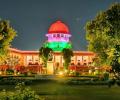
The Supreme Court has agreed to list for final hearing the pleas challenging the validity of certain provisions of the Places of Worship (Special Provisions) Act, 1991.
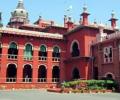
Thirty-six former judges have called on people, including parliamentarians, to denounce opposition leaders' move to impeach Madras High Court judge Justice G R Swaminathan, saying such an attempt would undermine democracy and judicial independence.
The Gauhati High Court has issued a notice to Assam Chief Minister Himanta Biswa Sarma in response to Public Interest Litigations (PILs) accusing him of hate speech, with the court also issuing notices to the Centre, state government, and DGP, and setting a hearing date for April 21.
The Centre has directed the NCERT to review all textbooks after the Supreme Court raised concerns about 'offending' content on corruption in the judiciary in a Class 8 social science book.
The Supreme Court has requested the Election Commission to consider extending the deadline for submitting enumeration forms for the Special Intensive Revision (SIR) of electoral rolls in Kerala, due to the ongoing local body elections.
The Supreme Court has directed all High Courts to submit details of pending acid attack cases and is considering setting up special courts for their expeditious disposal. The court is also considering amending the law to include acid attack survivors under the Rights of Persons with Disabilities Act.
The Supreme Court has criticised the Gurugram Police's handling of a three-year-old rape victim's case, citing an 'insensitive' approach and ordering key officials to appear before the court with all investigation records.
The Supreme Court intervened to ensure a tragedy-struck widow received compensation from the Railways after a 20-year legal battle following her husband's death in a train accident.

The Supreme Court has directed the CBI and Manipur SITs to provide copies of charge sheets in the 2023 Manipur ethnic violence cases to the victims and their families, ensuring legal aid and addressing concerns about the progress of investigations and victim support.
The Supreme Court has directed the CBI and Manipur SITs to provide charge sheets in the 2023 Manipur ethnic violence cases to the victims and their families, ensuring legal aid and covering travel expenses for court appearances in Guwahati.
The Supreme Court has directed the CBI and Manipur SITs to provide copies of charge sheets in the 2023 Manipur ethnic violence cases to the victims and their families, ensuring legal aid and addressing concerns over investigation progress and victim support.
The Supreme Court has directed the CBI and Manipur SITs to provide charge sheets in the 2023 Manipur ethnic violence cases to the victims and their families, ensuring legal aid and covering travel expenses for court appearances in Guwahati.
